An OCPP proxy is an application-layer broker between EV chargers and one or more CPMS/CSMS backends. Chargers open a single OCPP WebSocket to the proxy; the proxy routes or dual-runs traffic so you can migrate and multi-home backends without reconfiguring field hardware.
What is an OCPP proxy?
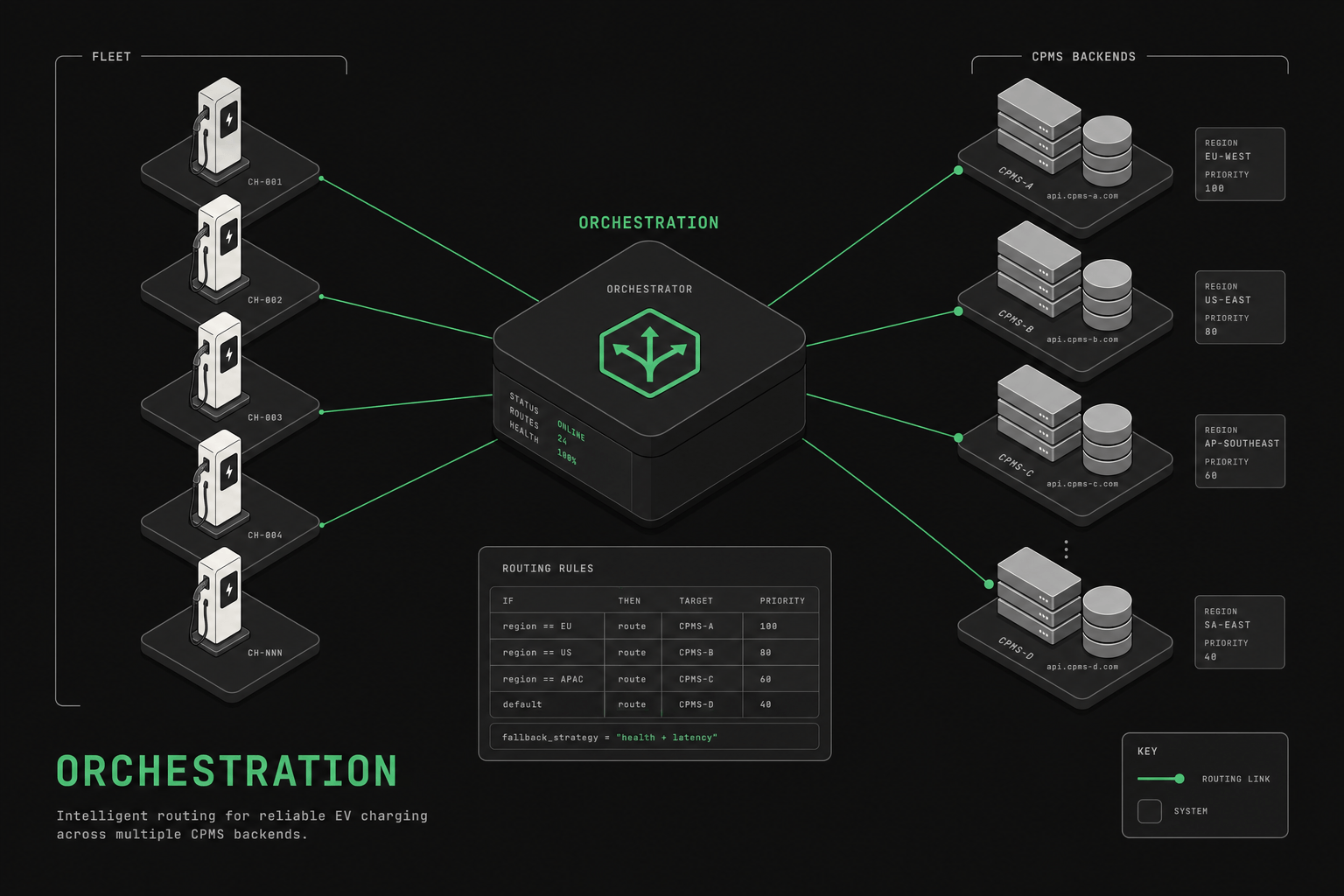
An OCPP proxy is software that sits between EV chargers and one or more central systems (CPMS/CSMS). Chargers open one OCPP WebSocket to the proxy. The proxy understands message IDs, CALL/CALLRESULT pairing, and routing policy—so you can dual-run backends, migrate in waves, or observe traffic without truck rolls.
If you are evaluating product options, start with the commercial landing: OCPP proxy for multi-backend routing. For connectivity-first language, see the OCPP gateway page. Both describe the same infrastructure layer ev-cloud runs in production.
Why operators search for “OCPP proxy”
Teams do not search for “proxy” because they want another hop for fun. They search because:
- Migration — old and new CPMS must see live traffic before cutover
- Multi-CPMS — billing, monitoring, and grid systems need different event views
- Stable field config — charger endpoint URLs must stop changing every vendor decision
- Debugging — ops need a place to inspect OCPP without SSHing into chargers
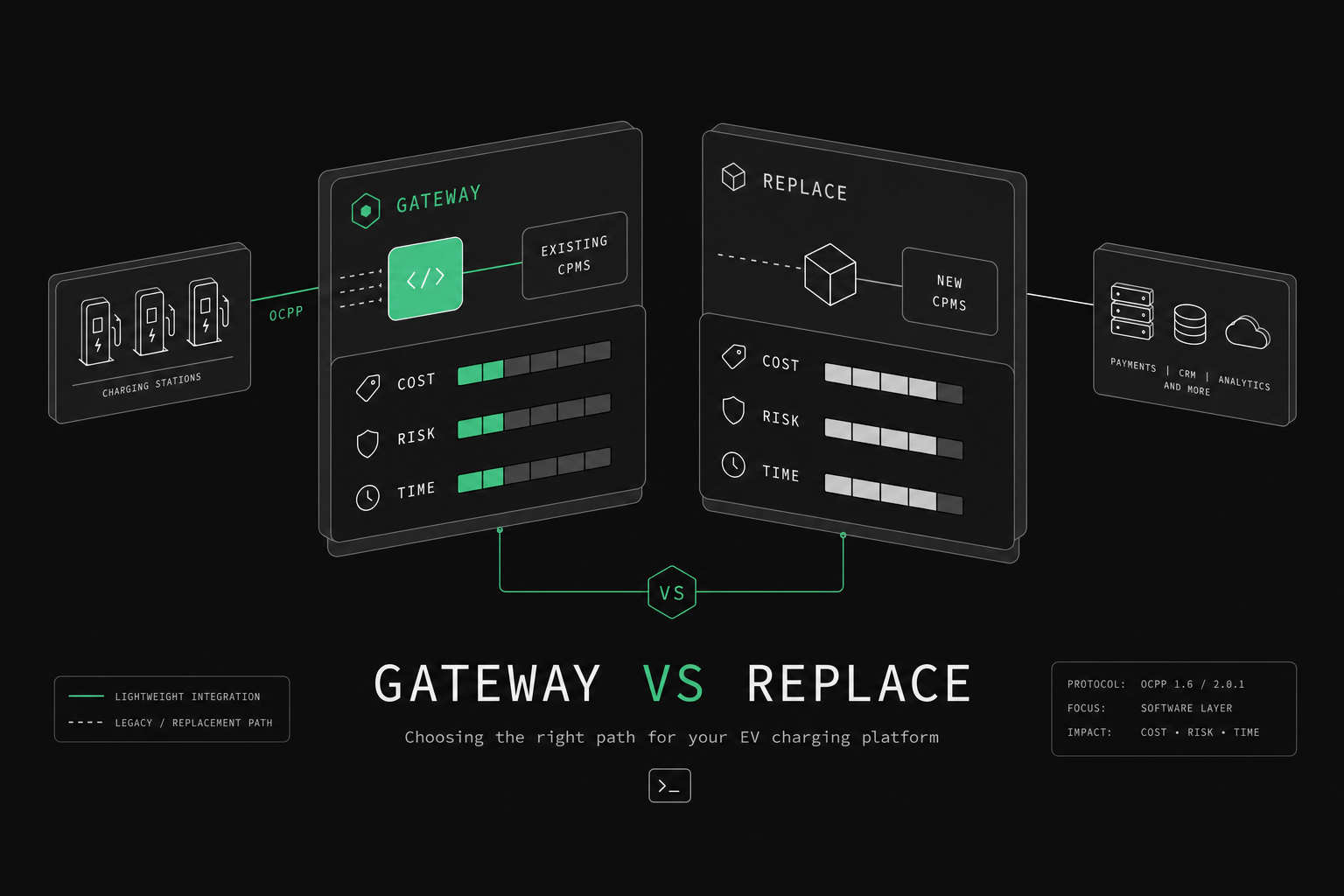
That is different from buying a full CPMS. A proxy/gateway changes the wire path; a CPMS changes the operating product. See OCPP gateway vs full CPMS replacement.
OCPP proxy vs TCP WebSocket mirror
The naive approach is a TCP proxy that copies frames to two backends. It fails for OCPP because the protocol is request/response, not a firehose.
| Approach | What happens | Result |
|---|---|---|
| TCP frame mirror | Two backends answer one CALL | Charger rejects duplicate responses |
| Dual RemoteStart | Two systems command one connector | Conflicting control, desynced state |
| Application OCPP proxy | One primary control path; observers optional | Stable sessions, safe dual-run |
You need an application-layer OCPP proxy that:
- Terminates the charger WebSocket
- Tracks message IDs and roles (primary vs observer)
- Forwards or fans out only according to policy
- Returns a single coherent CALLRESULT path to the charger
Deep dive: multi-CPMS orchestration.
OCPP proxy vs OCPP gateway
| Term | Emphasis | Typical buyer question |
|---|---|---|
| OCPP gateway | Mixed versions, normalization, one entry point | “How do I connect OCPP 1.6 and 2.0.1 fleets?” |
| OCPP proxy | Multi-backend routing, migration, traffic control | “How do I dual-run two CPMS systems?” |
In ev-cloud, both are the same infrastructure product surface: gateway connectivity plus proxy routing. Use the term your stakeholders already search for; evaluate on routing roles, rollback, and data ownership, not branding.
When an OCPP proxy is worth it
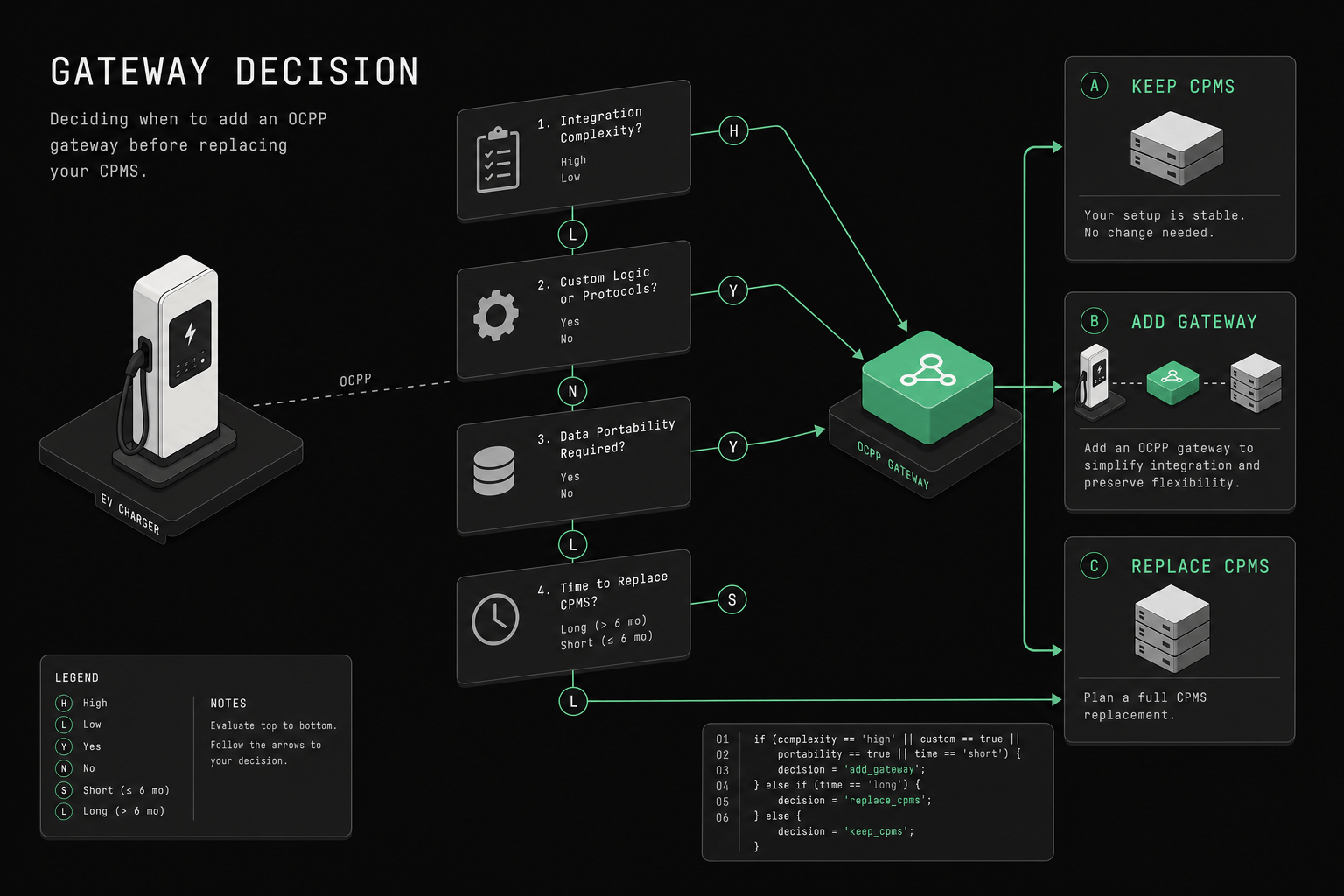
Add a proxy when at least two of these are true:
- More than one backend must see the same fleet
- Migration cannot be a single cutover night
- Charger URL changes are expensive or political
- You need observer analytics without control-plane conflicts
- Mixed OCPP dialects already hurt the incumbent CPMS
Skip a pure proxy layer only for tiny greenfield fleets with one backend forever—and even then, a lightweight OCPP gateway still helps when versions mix. Decision framework: when to add an OCPP gateway before replacing your CPMS.
What to demand from OCPP proxy software
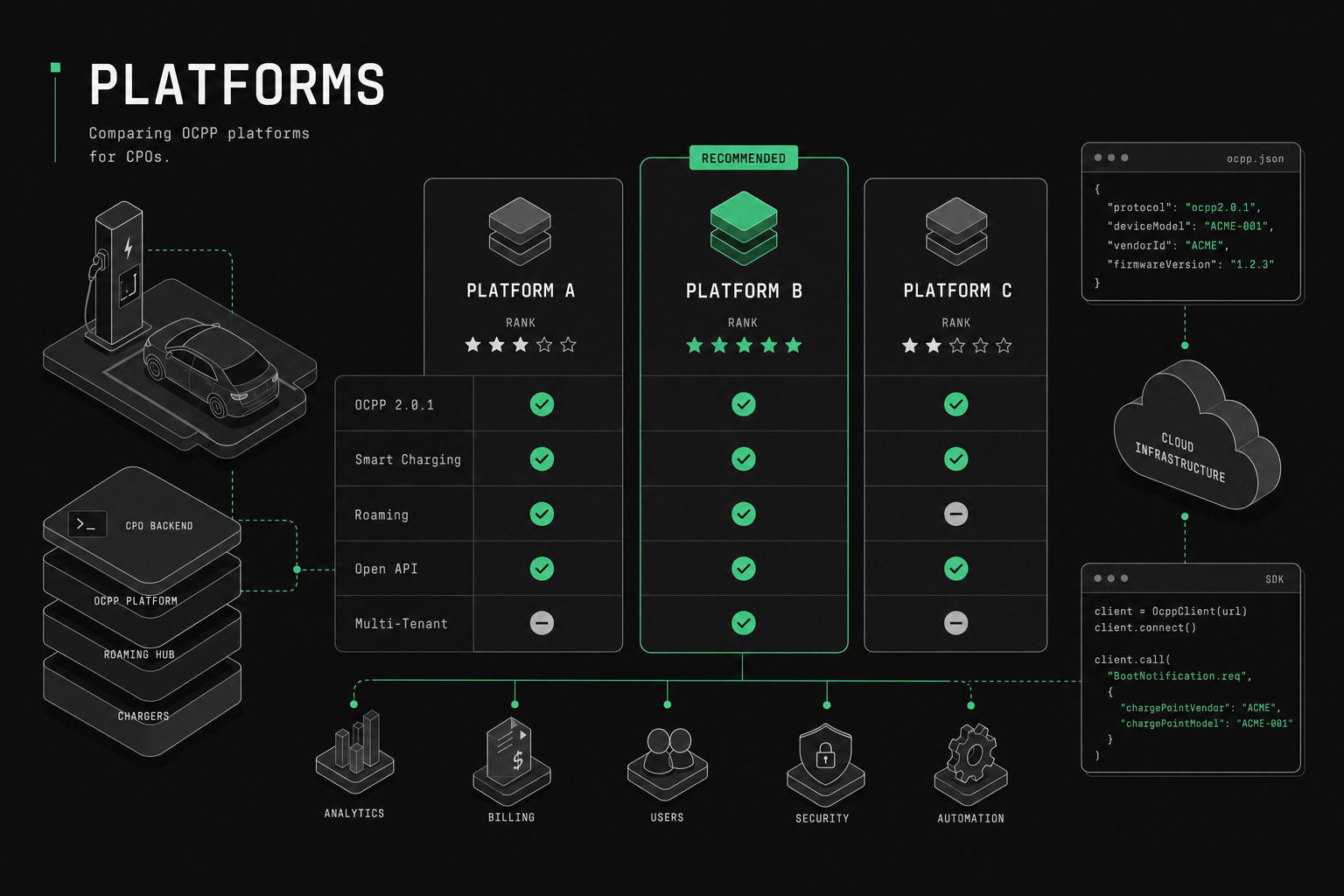
Score vendors on:
- Primary / observer roles — not dual control loops
- Wave-based routing — by site, vendor, or station group
- Rollback — re-point at the proxy, not on hardware
- OCPP version coverage — 1.6, 2.0.1, 2.1 in production
- Raw event access — export and debug without vendor lock-in
- Ops tooling — latency, reconnect, and error visibility
Use the OCPP platform scorecard and the buyer evaluation guide.
How ev-cloud implements the proxy pattern
ev-cloud runs as a persistent OCPP control plane:
- Chargers keep one stable endpoint
- Backends attach as primary or parallel sinks
- Migration waves change routing policy, not field firmware
- ChargerPilot AI agents sit on the same telemetry for OCPP ops assistance
See also Introducing ev-cloud: the universal OCPP bridge and pricing.