Control EV charging infrastructure without lock-in
OCPP 1.6 · 2.0.1 · 2.1 · OCPI 2.1.1 · 2.2.1 · 2.3.0 · Zero vendor lock-in
One OCPP gateway for mixed fleets. One OCPI gateway for roaming. Multi-backend routing and ChargerPilot AI so you can migrate systems without a big-bang cutover—or a hardware reset.
For evaluators
Turn charger estates into reversible plays
Point fleets at one OCPP gateway, map routing, then dual-run backends. The field layer stays stable while software changes.
Step 1
Connect
Point mixed fleets at one OCPP endpoint. OCPP 1.6, 2.0.1 and 2.1. No hardware reset.
OCPP gatewayStep 2
Detect
Map backends, protocol versions, and routing priority — the traffic split nobody documented.
OCPP proxyStep 3
Deploy
Run current and next systems in parallel. Dual-run stays reversible until you cut over.
Staged migration
Supported protocols
OCPP gateway and OCPI gateway coverage for the versions operators ship in production—plus complementary site protocols.
OCPP
Open Charge Point Protocol between chargers and the central system. ev-cloud’s OCPP gateway supports OCPP 1.6, OCPP 2.0.1 and OCPP 2.1 for mixed fleets through one field entry point.

OCPI
Open Charge Point Interface between CPOs and eMSPs for roaming, locations, tariffs, sessions, and CDRs. The OCPI gateway supports OCPI 2.1.1, OCPI 2.2.1 and OCPI 2.3.0 for hubs and bilateral partners.

EEBUS
EEBUS is a protocol suite for the Internet of Things that aims to standardize the interface between electrical consumers, producers, storages and (logical) managing entities.
Modbus
Modbus is a data communications protocol. It is a de facto standard communication protocol and widely used to connect industrial electronic devices.
One infrastructure layer for charger control, roaming, and migration.
Use ev-cloud between chargers, roaming partners, and internal systems so you can launch new workflows without replacing everything at once.
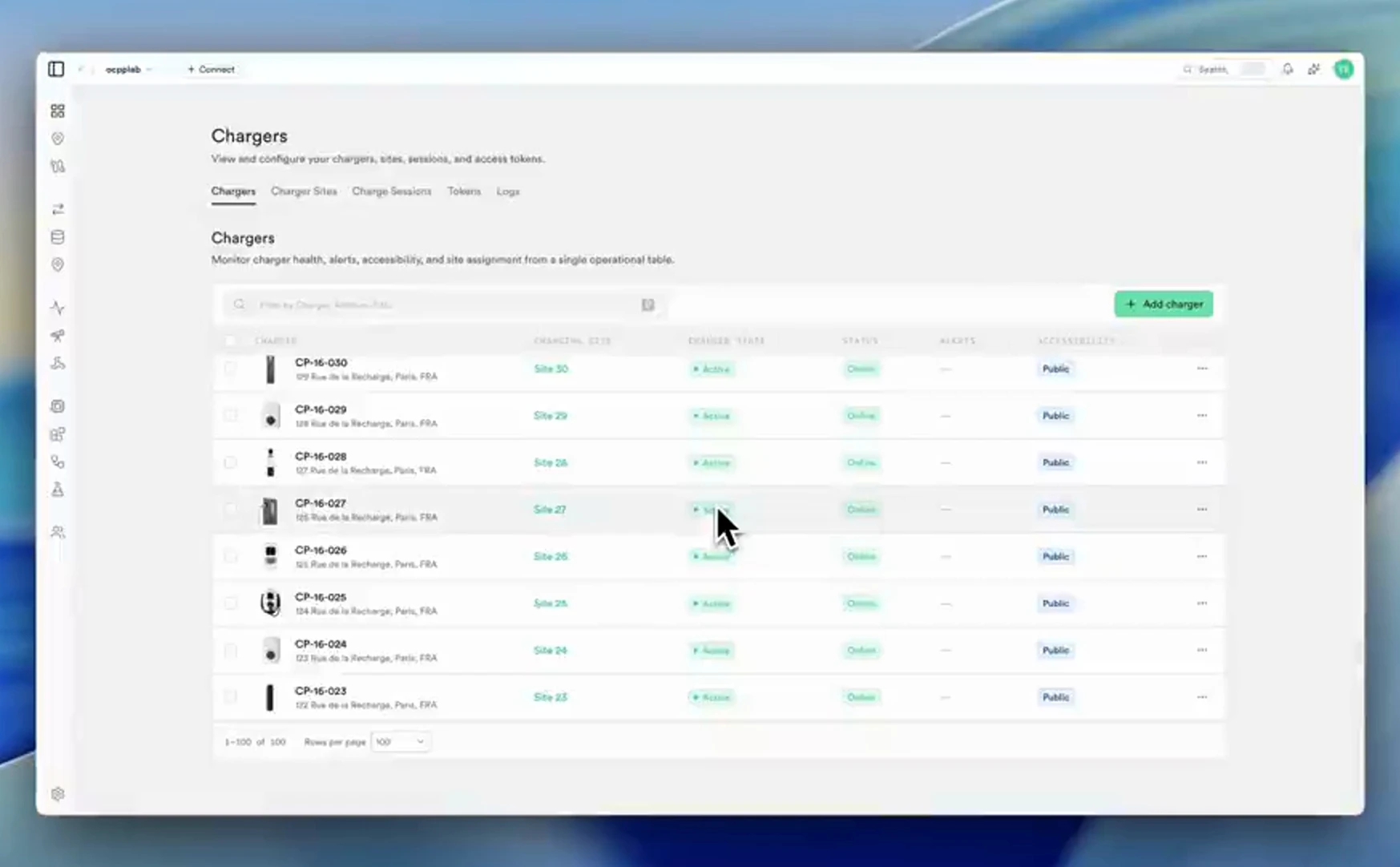 OCPP gateway
Connect
One OCPP gateway for mixed fleets. Normalize OCPP 1.6, 2.0.1 and 2.1 without reconfiguring hardware every time backend strategy changes.
Learn more about OCPP gateway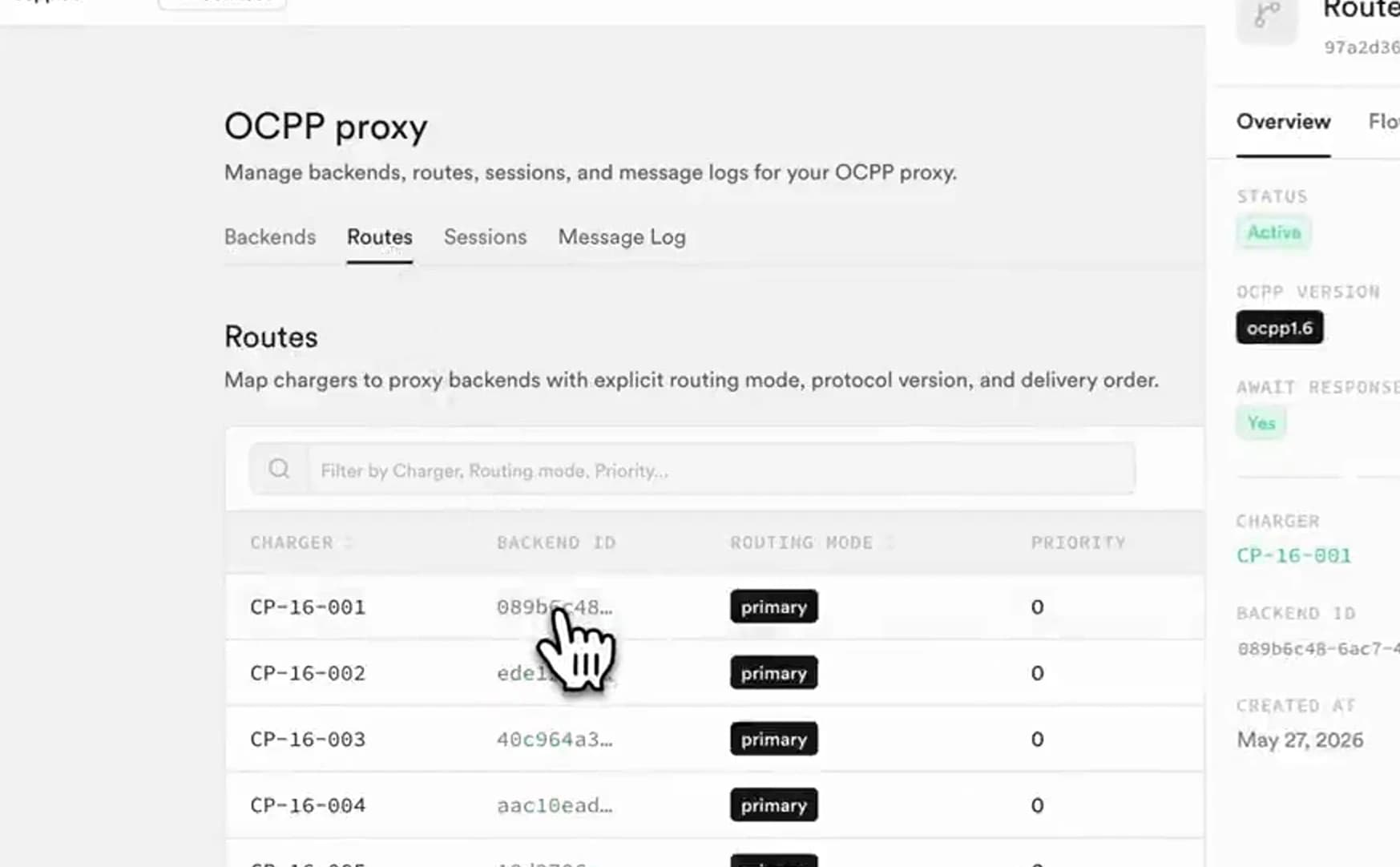 OCPP proxy
Route
Multi-backend routing and dual-run migration. Keep a stable field endpoint while primary and observer CPMS systems change behind the proxy.
Learn more about OCPP proxy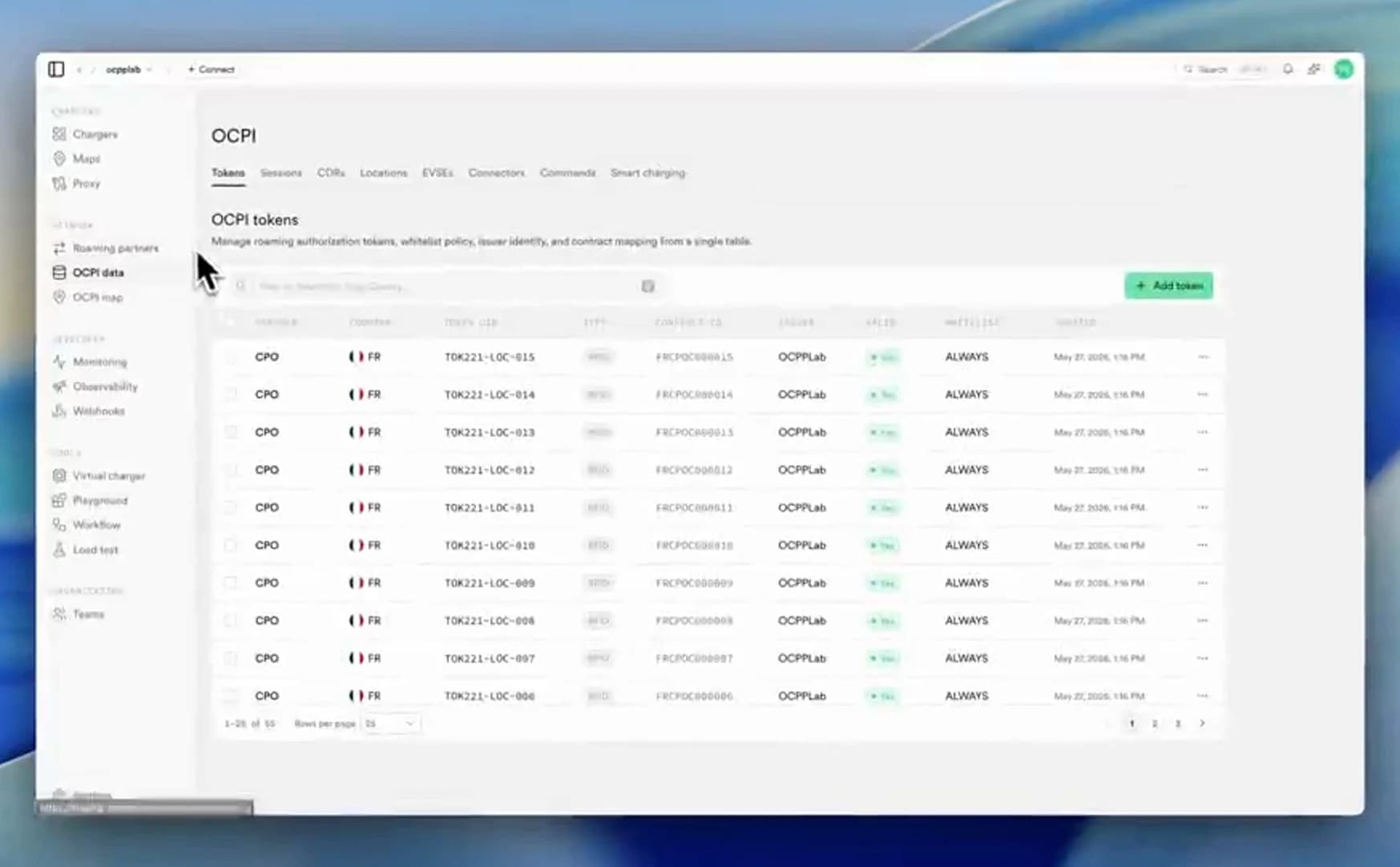 OCPI gateway
Interoperate
OCPI roaming for tokens, sessions, tariffs, and CDRs across 2.1.1, 2.2.1 and 2.3.0—without bolting partner logic into your core product.
Learn more about OCPI gateway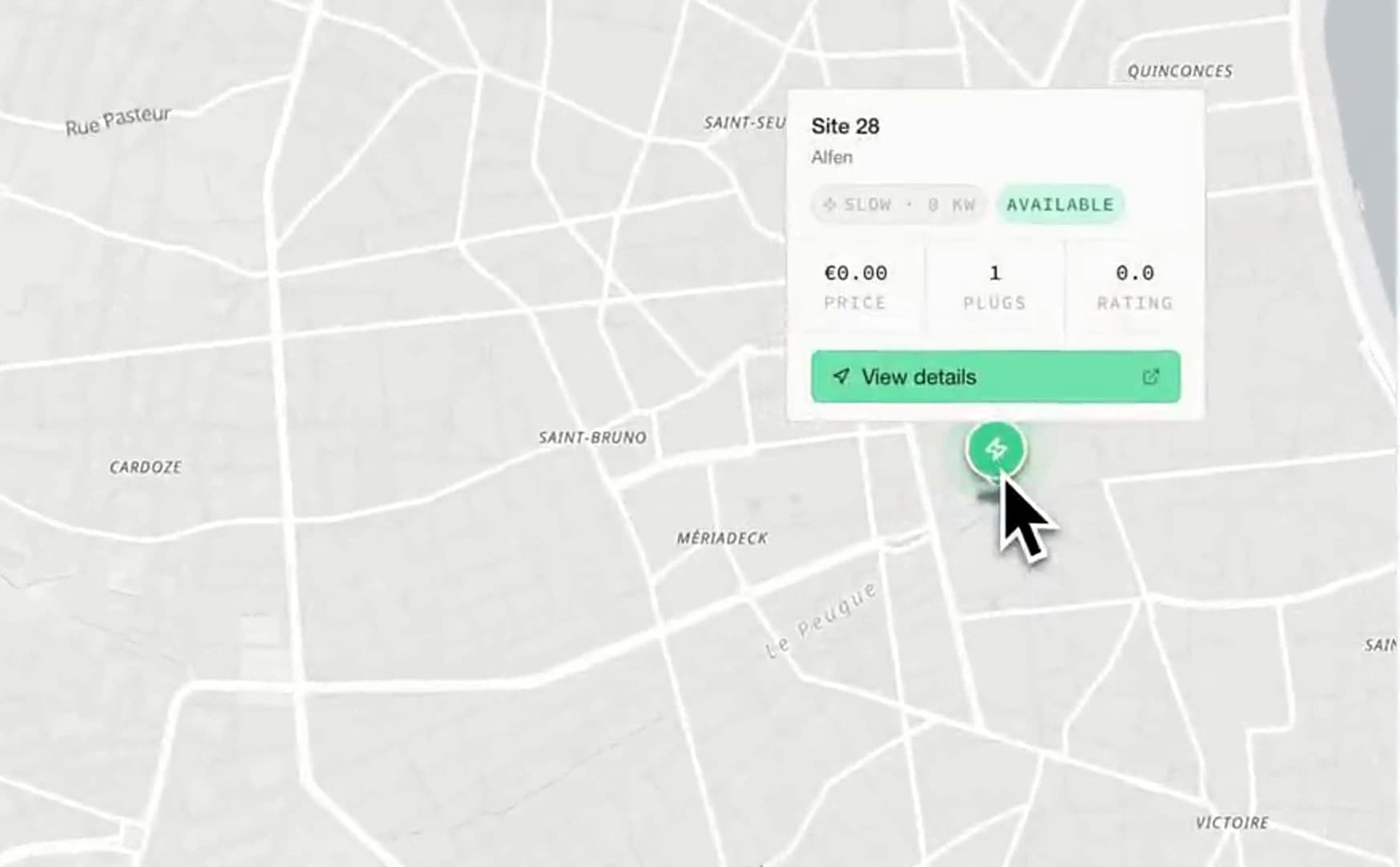 CPO platform migration
Migrate
Phase charger groups, preserve rollback, and coexist with the incumbent CPMS until the operating model proves out.
Learn more about CPO platform migration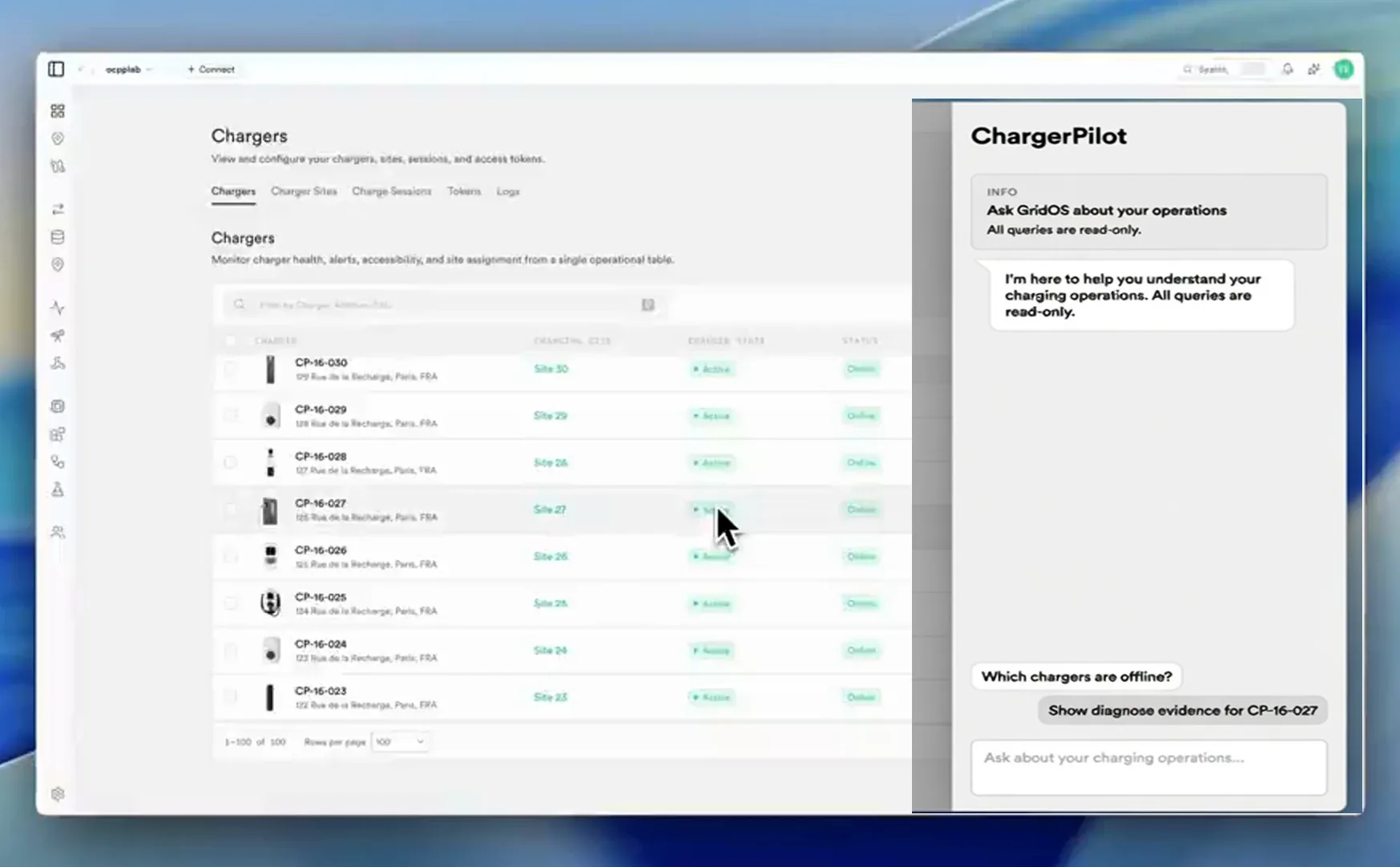 ChargerPilot AI
Operate
AI agents on gateway telemetry for anomaly triage, roaming exceptions, and multi-backend ops—without living in raw protocol logs.
Learn more about ChargerPilot AI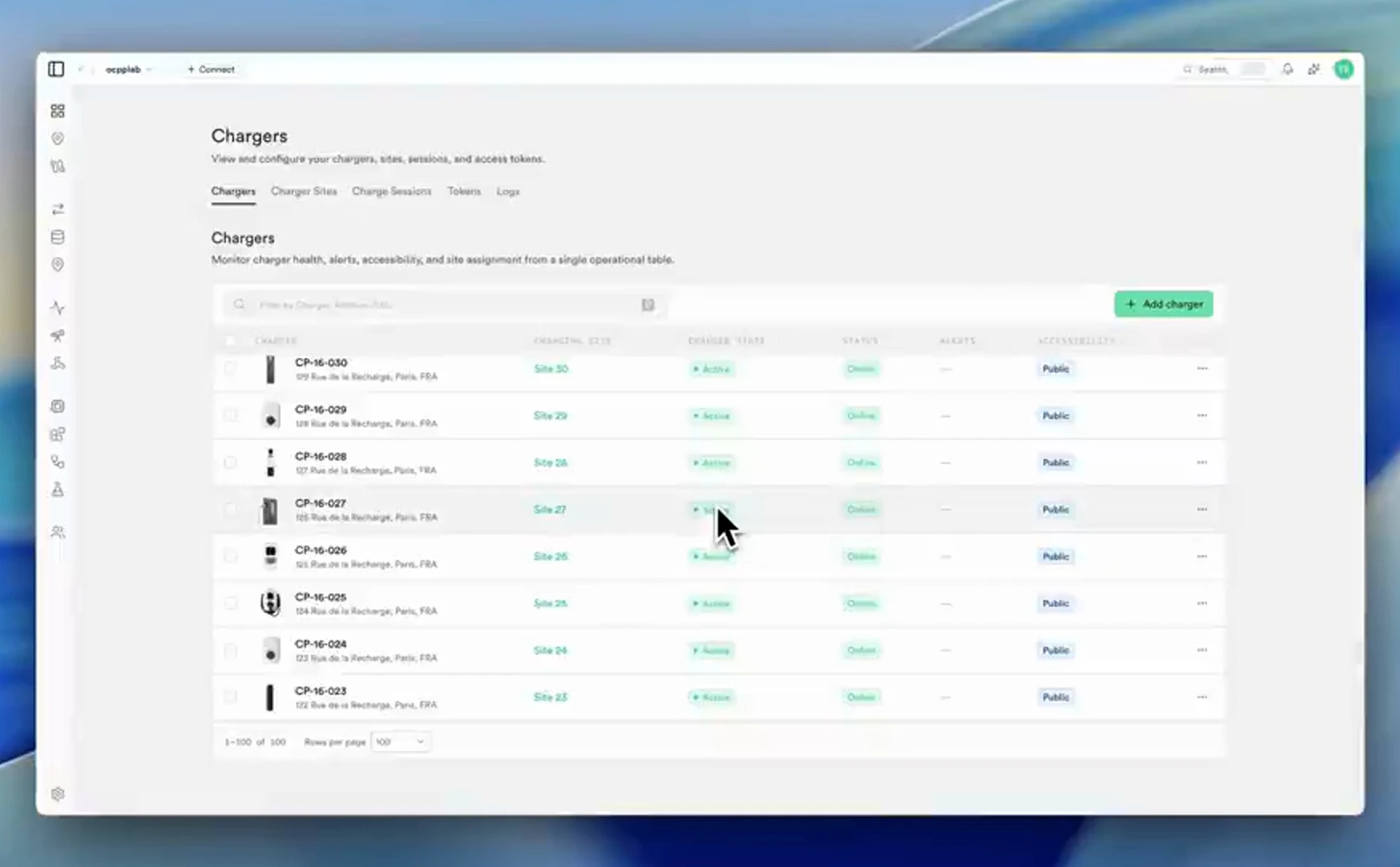 Multi-backend control
Own the stack
Keep data ownership and routing flexibility when one vendor relationship is not enough for every workflow.
Learn more about Multi-backend control
Build on EV Cloud
The same gateway your chargers talk to is scriptable. Provision chargers, launch a CPO bundle, or hand the whole fleet to an AI agent over MCP — with tokens issued from the dashboard Connect sheet.