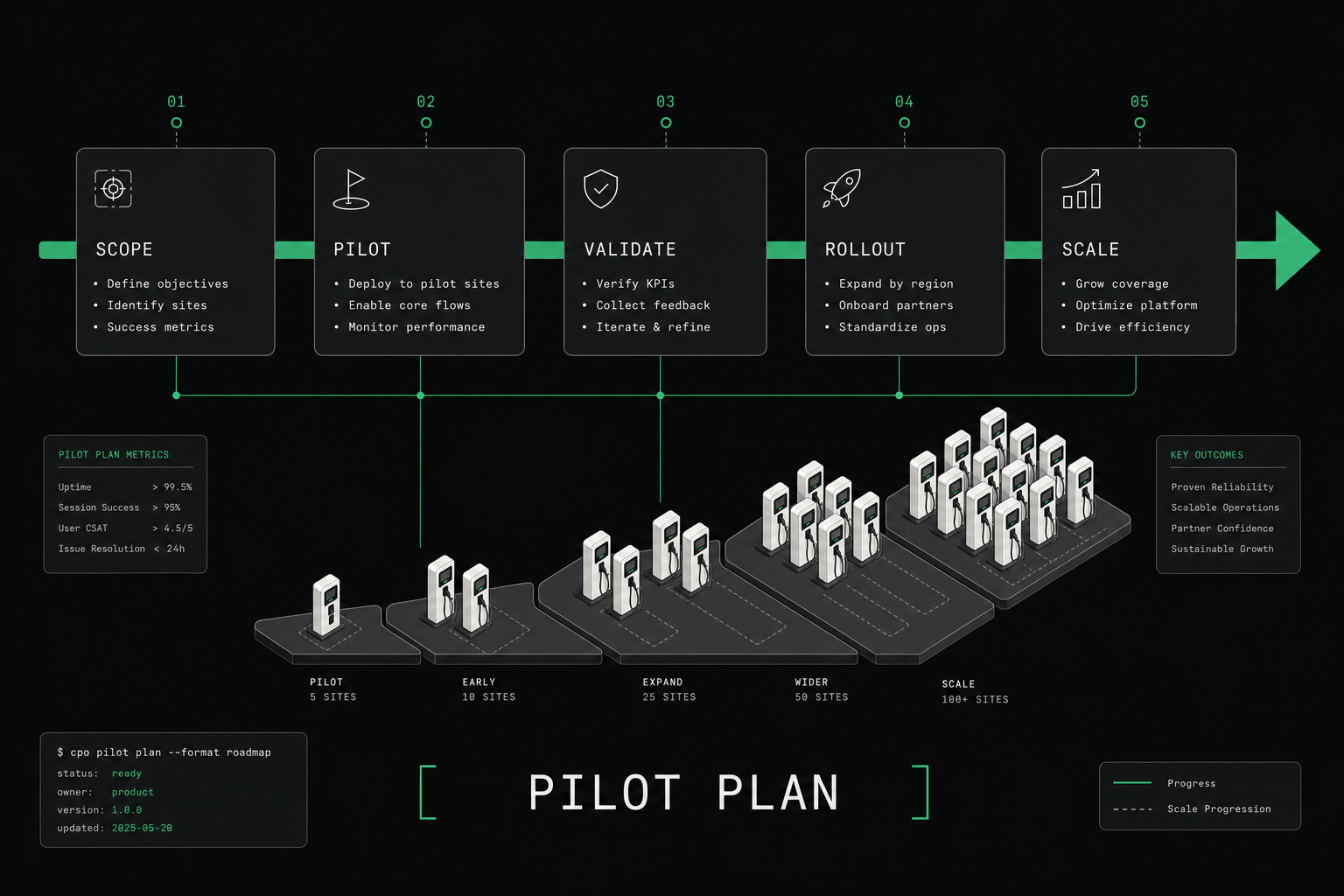
A strong pilot is not a mini production deployment. It is a controlled decision tool with explicit success criteria, rollback rules, and commercial gates before the fleet-wide commitment.
A pilot is a decision tool, not a ceremony
An EV charging software pilot is a time-boxed, controlled trial that tests whether a CPMS platform can run your real operations before you commit the whole fleet. It exists to reduce uncertainty, so treat it as a controlled experiment with a clear pass-or-fail outcome and explicit success criteria. Many EV charging software pilots are too shallow to do that.
They prove that a charger can connect over OCPP, a dashboard can load, and a vendor engineer can supervise a happy path during a scheduled demo. The hard problems usually surface later: when a firmware mix breaks boot notifications, when a roaming partner rejects a malformed CDR, or when the support team inherits an incident at 2am with no runbook. We have seen pilots that looked flawless on slides fall apart in the first week of real traffic, because nobody tested the operating model behind the UI.
A good pilot should answer one question:
Is this platform ready for our production reality?
That means testing not just connectivity, but operations, support, data, and migration behavior. Everything below is built around proving those four dimensions before procurement signs anything.
How big should an EV charging software pilot be?
Big enough to expose your real operational complexity, small enough to monitor closely and roll back cleanly. Scope is the single decision that determines whether the pilot tells you anything, so resist both extremes.
Avoid the two common mistakes:
- picking an unrealistically simple site that proves nothing
- picking such a large scope that the pilot becomes a disguised production rollout
A better pilot scope usually includes:
- more than one charger model if the fleet is mixed, because OCPP behavior diverges sharply between vendors and firmware versions
- at least one site with meaningful operational traffic, not an empty depot that never tests concurrency
- one or two key downstream integrations, such as billing or a roaming hub over OCPI
- the support team members who would actually handle incidents after rollout, not just the project lead
In mixed-fleet rollouts, the failure usually shows up at the charger-model boundary: one vendor sends a non-standard MeterValues payload, or handles a Reset differently from the OCPP specification, and the platform that looked fine with a single brand starts dropping sessions. Picking two or three deliberately different models is the cheapest way to surface that early. You are not optimizing for presentation quality. You are optimizing for decision quality.
What should a pilot prove before full rollout?
That the platform can operate in your environment, not just connect once. Write the exit criteria down before the pilot starts, across four areas, so the go or no-go decision rests on evidence instead of vendor charisma. Each block below pairs the criterion with the operational reason it matters.
1. Charger and session reliability
This block tests whether the platform keeps chargers online and sessions clean under real conditions, which is the foundation everything else sits on.
- connection stability, including how the platform handles OCPP WebSocket reconnects after a dropout
- session start and stop rates across the charger models in scope
- remote actions such as
Reset,UnlockConnector, and remote start or stop - behavior under reconnects or intermittent network conditions, since field sites rarely have clean connectivity
2. Operational workflows
This block tests whether your support team can actually run the platform, because a tool the operator cannot debug becomes a vendor dependency at scale.
- support team visibility into charger and session state without escalating every question to the vendor
- alerting quality, measured by how much noise the team has to ignore
- incident investigation speed, including access to raw OCPP logs
- role-based access and auditability for multi-team operations
3. Data and integrations
This block tests whether the data leaving the platform is trustworthy and reachable, which is what your billing and roaming partners depend on.
- session and CDR consistency, since a malformed CDR is the most common reason OCPI roaming settlement fails
- export access or event delivery, so finance and analytics are not blocked
- integration with billing, CRM, or monitoring tools using documented APIs
- roaming or authorization path validation over OCPI where relevant
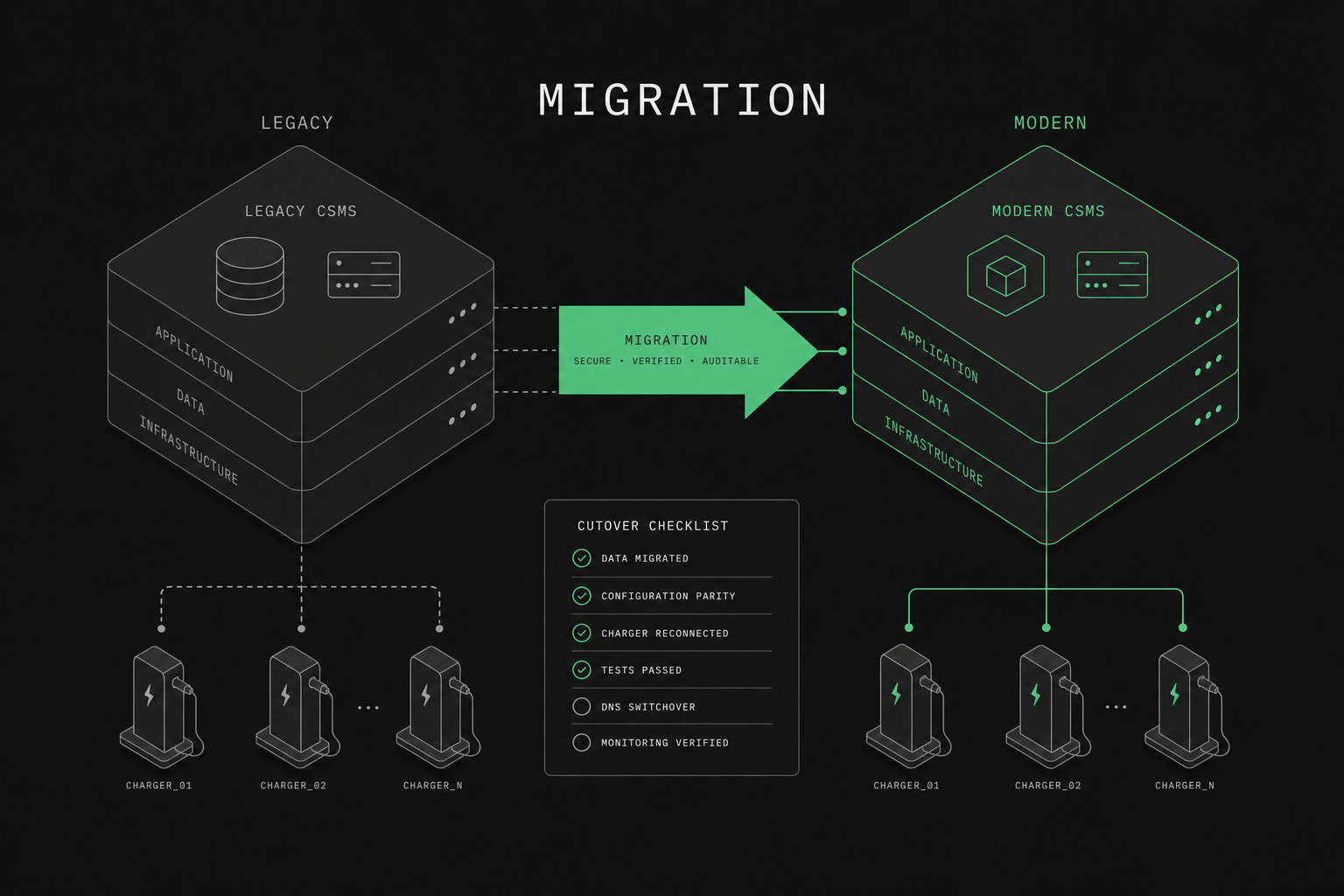
4. Rollback and migration safety
This block tests whether you can retreat safely and scale without re-architecting, which is what keeps a stalled rollout from becoming an outage.
- the ability to isolate issues quickly and pause a single site
- clear rollback mechanics that the team has actually rehearsed once
- ownership of incident response during the pilot, written down before go-live
- evidence that scale-up will not require a different architecture or a second migration
If these criteria are not written down first, the pilot will drift into subjective opinions, and the loudest stakeholder wins instead of the data.
Why do successful pilots still lead to failed rollouts?
Usually because the pilot was hand-held by the vendor in a way that disappears after signature. Pilots create false confidence when an engineer is manually fixing configs, restarting services, and watching dashboards full time, none of which exists at fleet scale.
So separate the pilot experience from the operating model you are actually buying. A useful exercise is to map each task to who owns it during the trial versus who owns it in production.
| Task | During pilot | After full rollout |
|---|---|---|
| Charger onboarding and config | Vendor engineer, hands-on | Your team, via self-serve tooling |
| Incident triage and OCPP log access | Vendor on a shared call | Your support tier, with documented access |
| CDR and billing export checks | Vendor validates manually | Automated, monitored by finance |
| Firmware or integration changes | Vendor services, often free | Scoped services, billed or contracted |
| 2am outage response | Often unclear | Must be a named SLA |
Ask the vendor directly: which of these stay hand-held, and which become your responsibility the day after commercial signature? In our experience, the gap between those two columns is where most rollout overruns hide. The pilot should show you the production operating model, not a temporary concierge experience.
When should you sign off on full rollout?
Only after a formal checkpoint where the written success criteria are met and the remaining risks are understood. Tie commercial sign-off to this gate, not to the calendar, so an impressive demo cannot substitute for evidence.
At the end of the pilot, hold a checkpoint that answers:
- Did the platform meet the written success criteria, with logs and data to show it?
- What issues remain open, and who owns each one?
- Are those issues pilot-specific quirks or fleet-wide risks that scale with the rollout?
- Does scale-up require extra architecture, services, or process changes you have not budgeted?
- What is the rollback or pause plan if rollout stalls midway?
If leadership cannot answer those clearly, the pilot did not reduce enough uncertainty, and signing now just defers the risk to production. A pilot that fails honestly is cheaper than a rollout that fails publicly. For the full sequencing of cutover and fallback, pair this with the legacy CSMS migration plan for CPOs.
Where ev-cloud fits
ev-cloud is built for pilots that evaluate rollout safety, interoperability, and migration flexibility rather than only UI polish. That focus matters when the real risk in your rollout is operational rather than cosmetic.
In practice, that usually means:
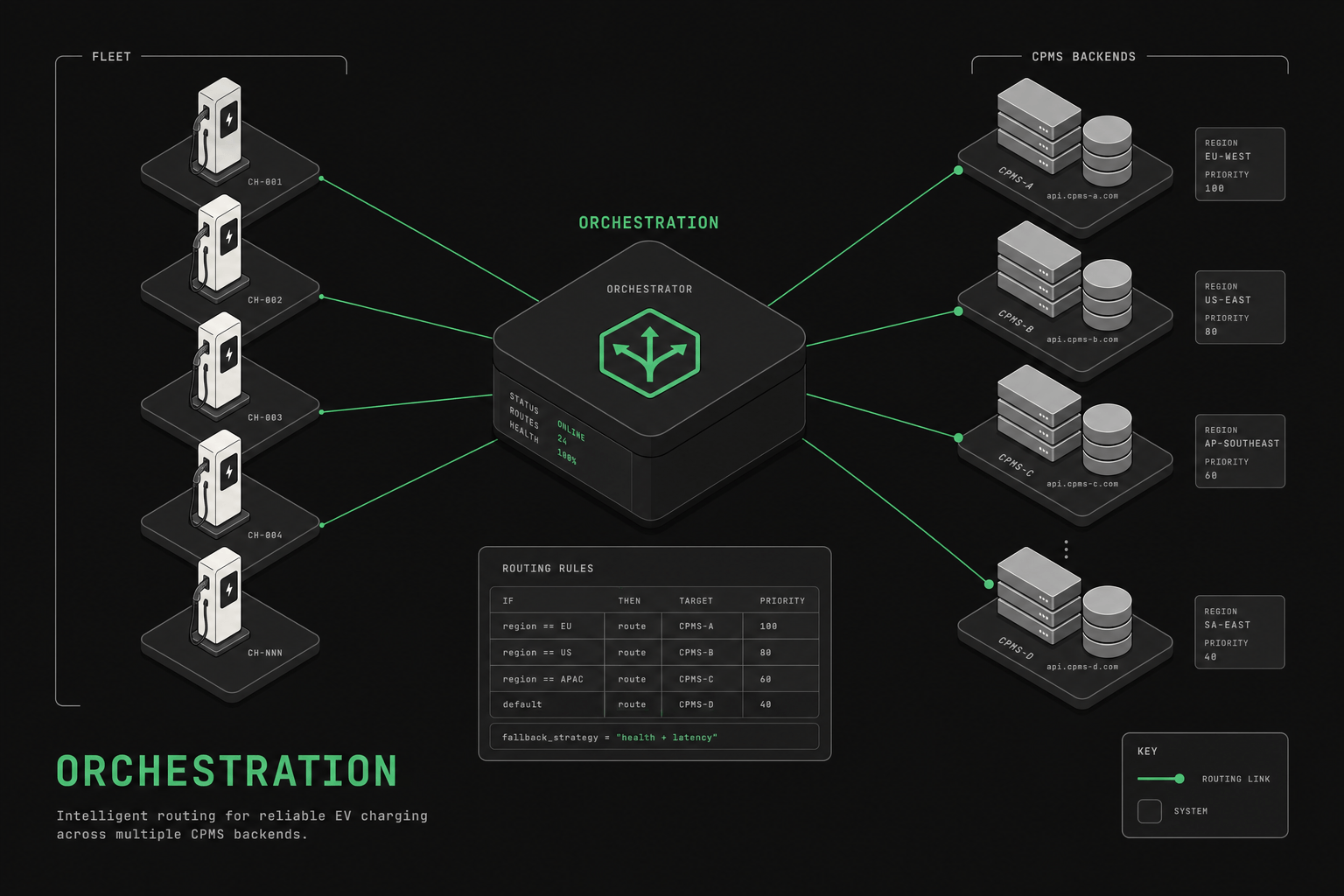
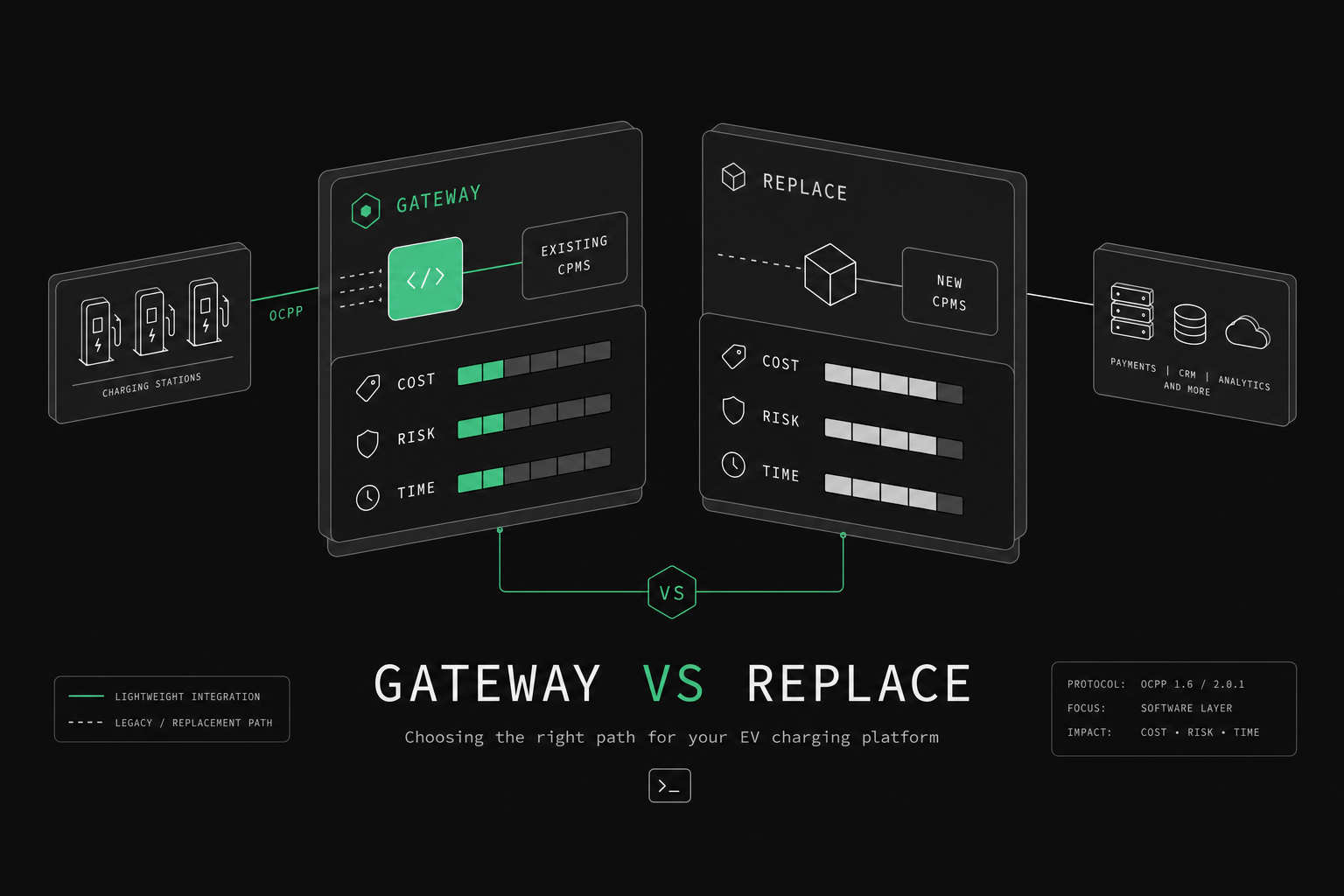
- testing an OCPP routing layer before committing to a full backend replacement
- validating mixed-fleet behavior in a controlled scope, across charger models and firmware
- proving data access and partner connectivity early, so finance and roaming are not surprised later
- keeping a rollback path open while commercial decisions are still being made
If you are already comparing vendors, pair this article with the OCPP buyer guide and the RFP checklist, then check the pricing page or book a scoping call to design a pilot around your own success criteria.